The complete guide to international schools in Portugal

The complete guide to international schools in Portugal

A region-by-region guide to Portugal’s leading international schools, helping families choose the right education for their children.

Portugal has become an increasingly popular destination for international families, attracting expatriates, digital nomads, entrepreneurs and investors from around the world. Alongside its lifestyle and climate, the country offers a broad choice of international schools, with British, American, International Baccalaureate (IB), French, German and other educational pathways.

From Lisbon and Cascais to Porto, the Algarve and Madeira, families can choose from a wide range of schools offering internationally recognised qualifications, multilingual learning and diverse educational approaches. While the Azores do not currently have established international schools, parents relocating elsewhere in Portugal have an extensive choice of options, whether moving permanently or for a few years.

Porto and Northern Portugal

Oporto British School – Porto

Established in 1894, Oporto British School is the oldest British school in mainland Europe. It follows the English National Curriculum before students progress to Cambridge IGCSEs and the International Baccalaureate (IB) Diploma Programme. It is one of Portugal’s longest-established international schools.

CLIP – The Oporto International School – Porto

CLIP offers an English-language education based on the Cambridge International curriculum before students progress to the International Baccalaureate (IB) Diploma Programme. The school serves students from more than 50 nationalities.

Deutsche Schule zu Porto – Porto

The German School of Porto offers bilingual German-Portuguese education based on German educational standards. It serves both German-speaking and international families and leads to the internationally recognised German Abitur.

Lycée Français International de Porto – Porto

Following the French national curriculum, Lycée Français International de Porto prepares students for the French Baccalauréat and higher education in France and around the world. The school welcomes students from a wide range of nationalities.

CJD International School – Porto

CJD International School offers both the Portuguese curriculum and an English-language international pathway, offering Cambridge qualifications alongside multilingual education. It serves both Portuguese and international families from early years through secondary education.

CLIB – Colégio Luso-Internacional de Braga – Braga

CLIB offers an English-language education from early years through secondary school, combining Portuguese and British approaches in its younger years before progressing to Cambridge IGCSE and AICE programmes. Serving Portuguese and international families, the school places a strong emphasis on multilingual learning and academic achievement.

Central Portugal

LIS – Leiria International School – Marinha Grande

Leiria International School offers an English-language Cambridge education for students aged three to 18, covering Early Years, Primary, Lower Secondary, IGCSE and AS/A Levels. The school serves Portuguese and international families and provides equivalence with the Portuguese education system.

Greater Lisbon

Carlucci American International School of Lisbon – Sintra

CAISL offers an American-based education from early childhood through Grade 12. Located in Linhó, Sintra, the school is accredited by the Middle States Association and offers the International Baccalaureate Diploma Programme alongside its American High School Diploma.

St Julian’s School – Carcavelos (Cascais)

Founded in 1932, St. Julian’s is one of Portugal’s oldest international schools. Students follow the National Curriculum for England through GCSEs before progressing to the International Baccalaureate Diploma or Career-related Programme. The school serves pupils from more than 60 nationalities.

Lycée Français Charles Lepierre – Lisbon

One of Portugal’s largest international schools, Lycée Français Charles Lepierre follows the French national curriculum from nursery through secondary education. It prepares students for the French Baccalauréat and higher education in France and elsewhere, while serving a diverse international community.

Deutsche Schule Lissabon – Lisbon

Founded in 1848, the German School of Lisbon offers a German-language education from kindergarten through secondary school, with Portuguese forming an important part of the curriculum. Students work towards the German International Abitur, which provides access to universities in Germany, Portugal and elsewhere.

United Lisbon International School – Lisbon

Located in eastern Lisbon, United Lisbon International School offers an English-language international education from early childhood through Grade 12. Its curriculum places a strong emphasis on technology, STEAM and project-based learning, culminating in the International Baccalaureate Diploma Programme.

International Sharing School – Porto Salvo (Oeiras)

International Sharing School offers the International Baccalaureate (IB) continuum in English from Nursery to Grade 12. The school places a strong emphasis on inquiry-based learning, innovation, leadership and entrepreneurial thinking within a diverse international community.

Oeiras International School – Oeiras

Located in Barcarena, Oeiras, Oeiras International School offers the full International Baccalaureate (IB) continuum from primary through secondary education. The school serves students from more than 48 nationalities and places a strong emphasis on inquiry-based learning, critical thinking and independent learning.

St Dominic’s International School – Cascais

An established IB World School in São Domingos de Rana, Cascais, St. Dominic’s offers the full International Baccalaureate (IB) continuum for students aged three to 18. The school combines a holistic approach to learning with a diverse international community and a strong emphasis on inquiry, inclusivity and personal development.

The Lisboan International School – Lisbon

One of Portugal’s newest international schools, The Lisboan offers an English-language education based on the National Curriculum for England, leading to Cambridge IGCSEs and the International Baccalaureate (IB) Diploma Programme. The curriculum combines academic rigour with a strong focus on sustainability, wellbeing and real-world learning.

The British School of Lisbon – Lisbon

The British School of Lisbon follows the English National Curriculum from early years through secondary education. With campuses in Cais do Sodré and Restelo, the school combines academic rigour with a strong emphasis on creativity, critical thinking, music, sport and the arts within an international community.

PaRK International School – Lisbon

Operating three campuses in Alfragide, Praça de Espanha and Restelo, PaRK International School offers bilingual education in the early years and primary school before students progress to Cambridge International programmes, including IGCSEs. Senior pupils can choose between A Levels and the International Baccalaureate Diploma Programme.

TASIS Portugal – Sintra

Part of the international TASIS network, TASIS Portugal offers an American-style education from Pre-K through Grade 12. Its curriculum combines Core Knowledge, Singapore Maths and international science standards before progressing to Cambridge IGCSEs and the International Baccalaureate Diploma Programme. The school places a strong emphasis on academics, arts, athletics and global citizenship.

Greene’s College Oxford International – Estoril

Specialising in A Levels, IGCSEs and university preparation, Greene’s provides individualised education through paired and small-group tutorials. Its Oxford-style approach is designed to help older students develop independence, meet their academic goals and prepare for higher education.

IPS Cascais British International School – Cascais

Located in Bicesse, Cascais, IPS follows the National Curriculum for England from nursery through lower secondary school, before students progress to IGCSEs. The school places a strong emphasis on individual support, pastoral care and a broad international education, with A Levels planned as its secondary provision expands.

Prime School International – Lisbon, Estoril and Sintra

Operating campuses in Lisbon, Estoril and Sintra, Prime School International offers the Cambridge International pathway from early years through A Levels. The school combines small class sizes with personalised learning, preparing students for universities in Portugal and around the world.

Redbridge International School – Lisbon

Redbridge International School offers two international educational pathways: a French International Programme leading to the Baccalauréat Français International (BFI), and a Cambridge International pathway leading to IGCSEs, with the International Baccalaureate Diploma Programme planned, subject to authorisation. The school places a strong emphasis on multilingual learning, inquiry-based education and multiculturalism.

King’s College School Cascais – Cascais

Opened in 2025, King’s College School Cascais offers the Cambridge International curriculum through IGCSEs, alongside a bilingual English-Portuguese programme in the primary years. Part of the Inspired Education Group, the school is an International Baccalaureate Diploma Programme candidate school and provides a broad international education with a strong emphasis on languages, creativity and academic achievement.

St. Peter’s International School – Palmela

Situated south of Lisbon, St. Peter’s International School offers an international pathway based on the Cambridge curriculum, leading to IGCSEs and the International Baccalaureate Diploma Programme. The school also offers a bilingual Portuguese pathway and prepares students for higher education in Portugal and around the world.

Algarve

Colégio Santiago Internacional – Tavira

Colégio Santiago Internacional follows the British National Curriculum from primary through secondary education. Students progress to Pearson Edexcel International GCSEs and International A Levels, while studying Portuguese as either a first or second language. The school serves an international community in a supportive, multicultural environment.

Bright International School – Loulé

Formerly Eupheus International School, Bright International School follows the Cambridge International curriculum from early years through secondary education. Students progress to IGCSEs and A Levels, while benefiting from a student-centred approach that emphasises inquiry-based learning, critical thinking, creativity and collaboration within an international community

Nobel Algarve Almancil – Almancil

Nobel Algarve Almancil offers an international education based on the National Curriculum of England from Nursery to Year 13. Housed on a purpose-built campus, students progress to IGCSEs before choosing either the International Baccalaureate Diploma Programme or BTEC qualifications.

Aspire International School – Almancil

Located between Vale do Lobo and Quinta do Lago, Aspire International School offers a British curriculum adapted for an international community from preschool through A Levels. Accredited by Cambridge International and Pearson Edexcel, the school combines small class sizes with a strong emphasis on personalised learning, creativity, critical thinking and personal development.

Vilamoura International School (Colégio Internacional de Vilamoura) – Vilamoura

Vilamoura International School offers both the Portuguese National Curriculum and an international pathway from early years through secondary education. The international route follows an adapted British curriculum, progressing through Cambridge International, IGCSEs and the International Baccalaureate Diploma Programme, within a multilingual and multicultural learning environment.

Nobel International School Algarve – Porches

One of Portugal’s largest international schools, Nobel Algarve has campuses in Lagoa and Almancil. The Lagoa campus follows the National Curriculum of England, with students progressing to IGCSEs before choosing A Levels or BTEC qualifications. The school also offers a Portuguese National Curriculum pathway.

Deutsche Schule Algarve – Silves

Deutsche Schule Algarve is a state-recognised German private school offering education from primary through secondary level. German is the main language of instruction, with Portuguese, English and French forming part of its multilingual programme. Students follow the German curriculum and work towards the internationally recognised German International Abitur within a small, intercultural school community.

Vale Verde International School – Lagos

Located near Lagos, Vale Verde International School follows the Cambridge International curriculum from primary through sixth form. Its distinctive bilingual primary programme combines the UK National Curriculum with Portuguese education, before students progress to IGCSEs and AS/A Levels. The school offers small classes and a diverse international learning environment.

Aljezur International School – Aljezur

Serving students aged 11 to 18 in the western Algarve, Aljezur International School follows the UK National Curriculum adapted to life in Portugal, leading to Cambridge IGCSEs with tutorial support for AS and A Levels. The school places a strong emphasis on small-group teaching, personalised learning, sustainability and environmental responsibility within an international community.

Madeira

International Sharing School – Funchal

An IB World School, International Sharing School – Madeira offers the full International Baccalaureate continuum from primary through secondary education. The school follows an inquiry-based approach, placing a strong emphasis on multilingual learning, intercultural understanding and developing internationally minded students within a diverse school community.

International School of Madeira – Funchal

Founded in 1997, the International School of Madeira provides a Cambridge-accredited English-language education for children aged three to 10. The school combines the Cambridge Early Years and Primary curriculum with a bilingual English and Portuguese programme, offering small class sizes and a supportive, family-oriented learning environment.

The Ultimate Expat Shopping Guide to Portugal

The Ultimate Expat Shopping Guide to Portugal

Everything you need to know about buying almost anything in Portugal

Moving to Portugal brings many pleasures: warmer weather, beautiful landscapes, excellent food and a more relaxed pace of life. It also brings a surprisingly long list of practical questions.

Where do you buy good-quality bed linen? Which supermarket offers the best choice? What is the Portuguese equivalent of a chemist or hardware shop? Can you order from Amazon? Where can you find familiar products from home? And what exactly should you ask for when you need a fitted sheet, an extension lead or a particular cut of meat?

Shopping in Portugal is not especially difficult, but it may work differently from what you are used to. Product names, measurements, opening hours, customer service and returns policies can all take a little time to understand.

This guide has been created to help new residents shop with greater confidence. From supermarkets and furniture stores to pharmacies, markets, garden centres and online shopping, it provides a practical introduction to buying what you need while discovering some of the excellent Portuguese products available along the way.


1. Understanding Shopping in Portugal

Portugal offers a mixture of large national chains, international retailers, family-run businesses, traditional markets and independent specialist shops.

In larger towns and cities, you will generally find shopping centres, retail parks and hypermarkets offering almost everything you need in one area. Smaller towns may have fewer large stores but often provide excellent local shops, municipal markets and independent businesses.

One of the pleasures of shopping in Portugal is discovering the value and personal service offered by smaller local retailers. The nearest independent hardware shop, butcher, bakery or electrical repair business may prove far more helpful than a large chain, particularly when you are looking for something specific.

Opening hours

Large supermarkets and shopping centres often open seven days a week, although hours vary according to location and season.

Independent shops may close for lunch, particularly outside major commercial centres. Some close on Saturday afternoons or Sundays.

Public holidays can also affect opening times, so it is worth checking before making a special journey.

Useful signs include:

  • Aberto – Open
  • Fechado – Closed
  • Horário – Opening hours
  • Encerrado para almoço – Closed for lunch
  • Feriado – Public holiday

Payment

Debit and credit cards are widely accepted, but some smaller businesses have minimum card-payment amounts or accept Portuguese cards more readily than foreign ones.

It is sensible to carry a small amount of cash, particularly when visiting municipal markets, cafés, village shops and rural businesses.

Multibanco is Portugal’s national banking and payment network. You may see signs stating:

  • Multibanco
  • MB WAY
  • Pagamento em numerário – Cash payment

Receipts and tax numbers

At the till, you may be asked:

“Contribuinte?”
or
“Número de contribuinte?”

This means the cashier is asking whether you would like your Portuguese tax number, known as the NIF, added to the receipt.

You are not obliged to provide it for an ordinary purchase, but residents may choose to do so for tax-record purposes or when buying higher-value goods.


2. Supermarkets and Food Shopping

Portugal has an excellent choice of supermarkets, ranging from discount stores to premium food halls.

The best supermarket will depend on what matters most to you: price, convenience, fresh produce, imported goods, wine, organic food or home delivery.

Continente

Continente is one of Portugal’s largest supermarket groups. Stores range from neighbourhood supermarkets to large hypermarkets.

Larger branches usually sell groceries, household products, clothing, small electrical items, garden products and seasonal goods.

Continente’s loyalty scheme is widely used and frequently offers discounts that can be redeemed against future purchases or with participating partner businesses.

Pingo Doce

Pingo Doce is popular for everyday shopping and has stores throughout Portugal.

Many branches offer ready-prepared meals, fresh bakery products, meat, fish and household essentials. Store size and product range vary considerably according to location.

Lidl

Lidl is a familiar choice for many international residents.

Alongside its regular groceries, bakery products and household essentials, it offers rotating promotions on clothing, gardening products, kitchen equipment, tools and small appliances.

The Lidl Plus app provides digital discounts and promotional offers.

Aldi

Aldi combines its own-brand groceries with imported products and regular seasonal promotions.

It can be particularly useful for speciality foods, household items and competitively priced everyday essentials.

Intermarché

Intermarché stores are found in many towns and smaller communities where other large supermarkets may not be present.

Some branches have strong fresh-food counters and a good selection of regional products.

Auchan

Auchan operates large-format stores and smaller supermarket concepts.

Larger stores may include extensive food, electrical, household, clothing and leisure departments.

Apolónia Supermercados

Based in the Algarve, Apolónia is known for its premium food selection, international products, speciality ingredients, fresh produce and wines.

It is particularly useful when looking for less common imported items, although prices may be higher than in mainstream supermarkets.

Local supermarkets and minimarkets

Do not overlook smaller chains and independent shops. They may not have the scale of a hypermarket, but they are often extremely convenient and may stock regional products that are difficult to find elsewhere.

Shopping tip:

Supermarket ranges vary considerably between branches. A product unavailable in one location may be stocked regularly at another branch of the same chain.


3. Fresh Markets, Butchers, Fishmongers and Bakeries

For fresh ingredients and a more traditional shopping experience, visit your local municipal market, known as a mercado municipal.

Markets commonly sell:

  • Fresh fish and seafood
  • Fruit and vegetables
  • Meat and poultry
  • Cheese
  • Bread and cakes
  • Olives
  • Herbs and spices
  • Flowers
  • Regional produce

The best choice is usually available early in the day. Some stalls close by lunchtime, especially once their fresh stock has been sold.

Buying fish

Portugal has an outstanding variety of fish and seafood.

Fish may be sold whole, but the seller will normally clean and prepare it for you if asked.

Useful phrases include:

  • Pode limpar, por favor? – Can you clean it, please?
  • Sem cabeça, por favor – Without the head, please
  • Em filetes – In fillets
  • Para grelhar – For grilling
  • Para duas pessoas – For two people

Buying meat

A traditional butcher is called a talho.

Portuguese cuts of meat may differ from those used in the UK, United States or other countries. Rather than relying only on the name of a familiar cut, explain how you intend to cook it.

For example:

  • Para assar – For roasting
  • Para estufar – For stewing
  • Para grelhar – For grilling
  • Carne picada – Minced meat
  • Peito de frango – Chicken breast
  • Costeletas – Chops

Bakeries and pastry shops

A bakery is a padaria, while a pastelaria sells cakes, pastries, coffee and often light meals.

Bread is an important part of Portuguese daily life, and many areas have distinctive regional varieties.

Trying the local bakery is often one of the easiest and most enjoyable ways to become part of the community.


4. International and Familiar Foods

Most large supermarkets stock at least a modest selection of international products. In areas with substantial expatriate populations, the choice can be extensive.

You may find familiar tea, breakfast cereals, sauces, biscuits, frozen foods and cooking ingredients in dedicated international sections.

Specialist shops also serve British, Irish, Dutch, German, Scandinavian, Asian, Brazilian, African and Eastern European communities.

However, living in Portugal is also an opportunity to discover local alternatives. Portuguese brands are frequently excellent value and may contain fewer unnecessary ingredients than some imported products.

Items that can be harder to find

Depending on your location, you may need to search more carefully for:

  • Particular types of tea
  • Speciality flour
  • Certain breakfast cereals
  • Specific sauces and condiments
  • Large jars of spices
  • Some vegetarian and vegan products
  • Gluten-free speciality products
  • Specific cuts of meat
  • Familiar over-the-counter remedies

Imported items may also cost considerably more than they do in their country of origin.


5. Portuguese Products Worth Discovering

Some of Portugal’s best products are also among its most affordable.

Olive oil

Portuguese olive oil is widely available and produced in several regions. Look for azeite virgem extra, meaning extra virgin olive oil.

Cheese

Portugal produces an exceptional variety of cheeses, from soft and creamy varieties to strongly flavoured cured cheeses.

Look out for cheeses from Serra da Estrela, Azeitão, Nisa, São Jorge and the Alentejo.

Tinned fish

Portuguese tinned fish is far more than a cupboard standby.

Sardines, tuna, mackerel, octopus and mussels are available in beautifully designed tins, often with olive oil, tomato, lemon, chilli or herbs.

Salt

Traditional sea salt and flor de sal are produced in Portugal, particularly in coastal regions.

Honey

Local markets and independent food shops often sell regional honey. Flavour varies according to the flowers and landscape surrounding the hives.

Ceramics

Portugal is famous for ceramics, including tableware, serving dishes, decorative tiles and hand-painted pieces.

Cork

Cork is used for far more than wine bottles. Bags, wallets, placemats, hats, home accessories and even footwear are widely available.


6. Wine Shopping in Portugal

Wine shopping can be one of the great pleasures of living in Portugal.

Good Portuguese wine does not need to be expensive, and excellent bottles can often be found at everyday supermarket prices.

Understanding the label

Useful terms include:

  • Tinto – Red
  • Branco – White
  • Rosé – Rosé
  • Verde – Literally “green”, although Vinho Verde refers to a wine region and style rather than the colour
  • Espumante – Sparkling wine
  • Seco – Dry
  • Meio seco – Medium dry
  • Reserva – A designated reserve wine, although meaning and quality vary
  • Colheita – Vintage or harvest
  • Garrafeira – Wine shop or cellar; on a label, it may also refer to a wine aged according to particular requirements

Wine regions

Portugal’s major wine regions include:

  • Douro
  • Dão
  • Alentejo
  • Vinho Verde
  • Bairrada
  • Setúbal
  • Tejo
  • Lisboa
  • Algarve
  • Madeira
  • The Azores

Supermarkets provide a wide choice, but specialist wine shops can be invaluable when selecting bottles for a meal, gift or special occasion.

Do not be afraid to give the shop assistant a budget. Portuguese wine professionals are generally very good at recommending excellent-value bottles.


7. Furniture and Furnishing Your Home

Furnishing a home in Portugal can involve a combination of international retailers, Portuguese chains, local furniture shops, carpenters and second-hand purchases.

IKEA

IKEA is a familiar starting point for many new residents and offers furniture, kitchens, storage, lighting, textiles and household products.

Delivery and assembly services are available in many areas, but costs and availability depend on location.

Conforama

Conforama sells furniture, mattresses, sofas, appliances and household goods. It often has promotional offers and bundled furniture ranges.

JOM and other Portuguese retailers

Portuguese furniture chains can offer competitive prices and a broad selection of styles.

Independent shops may provide more personal service, local delivery and greater flexibility regarding measurements, fabrics and finishes.

Made-to-measure furniture

Local carpenters and cabinetmakers can be an excellent option for awkward spaces, fitted wardrobes, shelving, kitchens and traditional properties.

Always request a written quotation confirming:

  • Measurements
  • Materials
  • Finish
  • Delivery
  • Installation
  • Payment terms
  • Estimated completion date

Beds and mattresses

Mattress dimensions may differ from those in your home country. Measure the bed frame before buying.

Do not assume that terms such as single, double, king or queen correspond exactly with overseas measurements.


8. Bed Linen, Towels and Home Textiles

Bed linen can cause unexpected confusion for new residents.

Portuguese mattresses and bedding sizes do not always correspond with British, American or northern European sizes.

  • A fitted sheet is called: Lençol de baixo ajustável
  • A flat sheet is: Lençol de cima
  • A duvet cover is: Capa de edredão
  • A pillowcase is: Fronha
  • A duvet is commonly called: Edredão

Always check the measurements printed on the packaging rather than relying only on names such as casal, king or queen.

Good places to look for household textiles include department stores, furniture shops, hypermarkets, specialist linen stores and homeware chains.


9. Homewares and Household Essentials

Portugal has a good choice of affordable homeware shops.

Depending on location, you may find branches of:

  • Hôma
  • Espaço Casa
  • CASA
  • Zara Home
  • IKEA
  • Large supermarkets and hypermarkets

These shops usually sell combinations of:

  • Kitchen equipment
  • Crockery
  • Glassware
  • Towels
  • Bedding
  • Storage
  • Decorative accessories
  • Garden items
  • Seasonal products

Chinese-run variety shops are also widespread and can be extremely useful for inexpensive household goods, storage boxes, stationery, tools, kitchen accessories and seasonal items.

They are often identified simply as a loja chinesa, although many are now large, modern retail businesses.


10. Electrical Appliances and Technology

Major electrical and technology retailers include Worten, Rádio Popular and FNAC, along with specialist computer and mobile-phone shops.

Large supermarkets may also sell televisions, small appliances and seasonal electrical goods.

Before buying, consider:

  • Delivery charges
  • Installation
  • Removal of the old appliance
  • Warranty arrangements
  • Availability of local repairs
  • Whether instructions are available in English
  • Whether the appliance fits the intended space

Measure doorways, staircases and installation spaces before ordering large refrigerators, washing machines or furniture.

Warranties

Keep the receipt, invoice and warranty documents.

For expensive purchases, ask whether the warranty process is handled by the retailer or directly by the manufacturer.

Never rely solely on a digital account unless you are certain the receipt has been stored correctly.


11. DIY, Tools and Home Improvement

Large DIY retailers include Leroy Merlin, MaxMat and Bricomarché.

They sell products such as:

  • Paint
  • Timber
  • Tools
  • Plumbing supplies
  • Electrical fittings
  • Bathroom equipment
  • Kitchens
  • Flooring
  • Garden products
  • Outdoor furniture
  • Building materials

Independent hardware shops, called drogarias or lojas de ferragens, can be particularly helpful when you need a small replacement part, unusual fitting or practical advice.

Take the old part with you whenever possible. A photograph with measurements can also save considerable time.

Useful terms include:

  • Parafuso – Screw
  • Prego – Nail
  • Broca – Drill bit
  • Berbequim – Drill
  • Tinta – Paint
  • Tomada – Electrical socket
  • Extensão elétrica – Extension lead
  • Lâmpada – Light bulb
  • Torneira – Tap
  • Fechadura – Lock
  • Chave – Key

12. Garden Centres and Outdoor Living

Portugal’s climate encourages outdoor living, but choosing plants requires some local knowledge.

Garden centres are called centros de jardinagem or viveiros.

Before purchasing plants, consider:

  • Sun exposure
  • Wind
  • Soil type
  • Water requirements
  • Salt exposure near the coast
  • Frost risk inland
  • Whether the plant is suitable for pots
  • Potential toxicity to pets

Native and drought-tolerant plants are often better suited to Portuguese conditions than varieties requiring frequent watering.

Garden centres may also sell:

  • Irrigation systems
  • Compost
  • Pots
  • Decorative stone
  • Barbecues
  • Outdoor furniture
  • Shade structures
  • Pool products
  • Garden tools

Local agricultural cooperatives can be useful for fertilisers, irrigation equipment, animal supplies and larger quantities of gardening products.


13. Pharmacies and Health Products

A pharmacy is called a farmácia and is identified by a green cross.

Portuguese pharmacists are highly trained and can often advise on minor health concerns, medication use and whether medical attention is needed.

Some medicines available over the counter in other countries may require a prescription in Portugal, while certain products handled differently elsewhere may be supplied following a discussion with the pharmacist.

You may be asked for:

  • Your prescription
  • Your Portuguese health number
  • Your tax number
  • Details of other medication
  • Information about allergies or medical conditions

Outside normal opening hours, a notice on the pharmacy door usually identifies the nearest duty pharmacy.

A health and beauty shop or para-pharmacy may sell cosmetics, supplements, baby products and non-prescription health items, but it is not the same as a licensed pharmacy.


14. Clothing, Shoes and Shopping Centres

Portugal has a wide choice of international fashion chains, Portuguese brands, designer shops, outlets and independent boutiques.

Large shopping centres provide convenience, air conditioning, food courts, cinemas and free or low-cost parking.

Popular Portuguese fashion and footwear brands can offer excellent quality, particularly in leather goods and shoes.

Sales periods

The word for sale is: Saldos

You may also see:

  • Promoção – Promotion
  • Desconto – Discount
  • Liquidação – Clearance
  • Últimas unidades – Last items
  • Até 50% – Up to 50%

Check whether discounted goods can be returned or exchanged, particularly when buying from smaller shops.

Clothing sizes

Sizes can vary significantly between brands. Trying items on is advisable, especially when changing between UK, European and American sizing systems.


15. Shopping for Children and Babies

Large supermarkets, department stores, shopping centres and specialist retailers sell baby equipment, clothing, nappies and children’s products.

Useful terms include:

  • Fraldas – Nappies
  • Toalhitas – Baby wipes
  • Carrinho de bebé – Pushchair
  • Cadeira auto – Car seat
  • Berço – Cot
  • Biberão – Baby bottle
  • Chupeta – Dummy or pacifier
  • Roupa de criança – Children’s clothing

Check that car seats and safety equipment comply with current European standards.

Second-hand children’s goods are widely available online, but exercise care when buying safety-critical products such as car seats, cots and mattresses.


16. Pet Supplies

Pet shops are known as lojas de animais.

Supermarkets stock mainstream pet foods and basic supplies, while specialist retailers offer a wider range of:

  • Veterinary diets
  • Harnesses and leads
  • Beds
  • Carriers
  • Grooming products
  • Toys
  • Flea and tick treatments
  • Aquariums
  • Bird supplies

Veterinary clinics may sell prescription diets and health products.

When buying parasite treatments, make sure the product is suitable for the species and weight of your pet. Never use a dog treatment on a cat without veterinary confirmation.

Useful terms include:

  • Ração – Pet food
  • Trela – Lead
  • Peitoral – Harness
  • Coleira – Collar
  • Cama para cão – Dog bed
  • Transportadora – Pet carrier
  • Veterinário – Vet

17. Cars, Fuel and Motoring Supplies

Car-related purchases can include far more than simply buying the vehicle.

You may need:

  • Insurance
  • Servicing
  • Tyres
  • Replacement parts
  • Toll-road registration
  • Vehicle inspection
  • Breakdown assistance
  • Parking permits
  • Car-cleaning products

Fuel stations may be attended or self-service.

Common fuel terms include:

  • Gasolina – Petrol
  • Gasóleo – Diesel
  • Sem chumbo – Unleaded
  • GPL – LPG
  • Elétrico – Electric
  • Carregamento – Charging

Be certain which fuel your vehicle requires. Pump colours and labels may differ from those in your previous country.

A vehicle inspection is commonly referred to as the IPO.

For servicing and repairs, request an estimate before authorising extensive work and ask whether the price includes IVA.


18. Second-Hand Shopping

Portugal has an active market for second-hand furniture, vehicles, appliances and household goods.

Online platforms, social-media groups, charity shops, markets and local noticeboards can all be useful.

Second-hand purchases can offer good value, particularly for:

  • Outdoor furniture
  • Garden equipment
  • Children’s items
  • Storage
  • Tools
  • Temporary accommodation
  • Rental properties

However, inspect electrical goods carefully and confirm that large items can be transported safely.

For private transactions:

  • Meet in a safe location
  • Avoid paying large deposits without verification
  • Check the item before completing payment
  • Be cautious of unusually low prices
  • Confirm ownership of higher-value items

19. Online Shopping and Home Delivery

Online shopping is widely available in Portugal, although delivery experiences vary according to location.

Many Portuguese retailers provide home delivery, store collection or collection from lockers and designated pickup points.

Amazon Spain is frequently used by residents in Portugal, but not every product can be delivered to a Portuguese address. Delivery costs and return arrangements vary by seller.

Other European and international websites may ship to Portugal, but always check:

  • Delivery charges
  • Estimated delivery date
  • Return costs
  • Whether taxes are included
  • Where the seller is based
  • Whether customs charges may apply
  • Warranty arrangements
  • Plug type and voltage

Orders arriving from outside the European Union may be subject to customs procedures, taxes or handling charges.

Delivery addresses

Portuguese addresses can be confusing, particularly in rural areas or developments without clear street numbers.

Include:

  • Full name
  • Street or development name
  • House or apartment number
  • Floor and door designation
  • Postcode
  • Town
  • Mobile number
  • Delivery instructions where permitted

A Portuguese mobile number can make delivery considerably easier because drivers frequently telephone when they are nearby.


20. Returns, Exchanges and Consumer Rights

Do not assume that every shop will accept a return simply because you changed your mind.

Return and exchange policies vary, particularly for purchases made in physical stores. Some retailers offer generous voluntary return periods, while others may only exchange an item or issue store credit.

Online purchases generally have different rules from purchases made in person.

Always check:

  • How many days you have to return the item
  • Whether the packaging must remain unopened
  • Whether you need the original receipt
  • Whether sale items can be returned
  • Whether the refund is made in cash, to the original card or as store credit
  • Who pays return postage for online orders

Faulty products are treated differently from unwanted products.

Keep receipts for appliances, technology, furniture and other significant purchases.

Useful phrases include:

  • Queria devolver este artigo – I would like to return this item
  • Queria trocar – I would like to exchange it
  • Tenho o recibo – I have the receipt
  • Está avariado – It is faulty
  • Não funciona – It does not work
  • Qual é o prazo para devolução? – What is the return period?
  • Posso receber um reembolso? – Can I receive a refund?

21. Loyalty Cards, Apps and Promotions

Portugal’s larger retailers make extensive use of loyalty programmes and mobile apps.

Benefits may include:

  • Immediate discounts
  • Digital coupons
  • Points
  • Fuel savings
  • Partner offers
  • Personalised promotions
  • Discounts on future purchases

However, promotional pricing can sometimes be complicated. A displayed discount may require a loyalty card or may be credited for future use rather than deducted immediately.

Check the small print and confirm whether the price is:

  • Available to everyone
  • Exclusive to loyalty-card members
  • Applied immediately
  • Issued as a voucher
  • Valid only on particular dates

It can be worth joining the schemes of retailers you use regularly, but there is little benefit in collecting numerous cards for shops you rarely visit.


22. Shopping Vocabulary

At the till

  • Quanto custa? – How much does it cost?
  • Tem desconto? – Is there a discount?
  • Posso pagar com cartão? – Can I pay by card?
  • Precisa de saco? – Do you need a bag?
  • É tudo? – Is that everything?
  • Quer contribuinte? – Do you want your tax number on the receipt?
  • Talão – Receipt
  • Fatura – Invoice
  • Troco – Change

Finding an item

  • Onde posso encontrar…? – Where can I find…?
  • Tem este produto? – Do you have this product?
  • Há noutro tamanho? – Is there another size?
  • Há noutra cor? – Is there another colour?
  • Está esgotado – It is sold out
  • Quando chega novamente? – When will it be available again?

Delivery

  • Fazem entregas? – Do you deliver?
  • Quanto custa a entrega? – How much is delivery?
  • Fazem montagem? – Do you provide assembly?
  • Quando podem entregar? – When can you deliver?
  • Pode ligar antes de chegar? – Can you call before arriving?

23. Measurements and Sizes

Portugal uses the metric system.

You will need to become familiar with:

  • Millimetres
  • Centimetres
  • Metres
  • Square metres
  • Grams
  • Kilograms
  • Millilitres
  • Litres
  • Celsius

Useful approximate conversions include:

  • 1 inch = 2.54 centimetres
  • 1 foot = 30.48 centimetres
  • 1 metre = approximately 3 feet 3 inches
  • 1 kilogram = approximately 2.2 pounds
  • 1 litre = approximately 1.76 UK pints
  • 30°C = 86°F
  • 20°C = 68°F

When ordering furniture, curtains, blinds, appliances or building materials, always provide metric measurements.

Measure twice and write the figures down clearly.


24. Seasonal Shopping

Portugal’s shopping calendar has its own rhythm.

Spring

Garden centres become especially busy, and outdoor furniture, barbecues, plants and pool equipment appear in stores.

Summer

Fans, air-conditioning units, shade products, cool boxes and beach equipment are in demand. Popular items may sell out during heatwaves.

Autumn

Heating products, dehumidifiers, rugs and winter bedding begin to appear.

Christmas

Supermarkets expand their ranges of chocolates, cakes, wines, toys and gift products. Traditional Portuguese Christmas foods are widely promoted.

Black Friday

Black Friday has become a major retail event, particularly for appliances, technology and online shopping.

Compare prices in advance, as not every advertised reduction represents an exceptional deal.


25. Common Shopping Mistakes

New residents often make the same avoidable mistakes.

Assuming familiar sizes are universal

Always check centimetres and exact dimensions.

Buying large items without checking delivery access

Measure gates, doorways, lifts and staircases.

Discarding receipts

Keep proof of purchase, particularly for electrical goods and furniture.

Assuming a promotion applies automatically

Some discounts require an app, loyalty card or voucher.

Ordering from outside the EU without checking charges

Import taxes and handling fees can turn a bargain into an expensive purchase.

Ignoring local businesses

Independent retailers may offer better advice, installation and after-sales service.

Buying plants unsuited to the climate

Choose plants according to local conditions, not simply appearance.

Expecting every imported product to be available

A Portuguese alternative may be easier to find, fresher and less expensive.


26. Final Advice for New Residents

Shopping in Portugal becomes easier very quickly.

Learn a few useful words, keep photographs of hard-to-describe items on your phone and carry basic measurements when shopping for the home.

Ask neighbours where they buy meat, fish, plants, tools and household products. Local knowledge is invaluable, and personal recommendations often lead to businesses you would never discover through a standard internet search.

Above all, allow yourself time to explore.

The aim is not to recreate every detail of your former life. It is to find the products you need while discovering new foods, new brands and new ways of doing things.

From your first visit to the local market to choosing a favourite Portuguese wine, shopping can become an enjoyable part of making Portugal feel like home.


Quick Reference Checklist

Essential cards and information

  • Portuguese bank card
  • NIF or tax number
  • Portuguese mobile number
  • Loyalty cards or apps
  • Home measurements
  • Delivery address
  • Copies of major receipts

Useful shopping words

  • Loja – Shop
  • Supermercado – Supermarket
  • Centro comercial – Shopping centre
  • Mercado – Market
  • Farmácia – Pharmacy
  • Talho – Butcher
  • Peixaria – Fishmonger
  • Padaria – Bakery
  • Ferragens – Hardware
  • Mobiliário – Furniture
  • Eletrodomésticos – Household appliances
  • Entrega – Delivery
  • Montagem – Assembly
  • Garantia – Warranty
  • Devolução – Return
  • Troca – Exchange
  • Reembolso – Refund
  • Desconto – Discount
  • Promoção – Promotion
  • Esgotado – Sold out

Before buying a major item

  • Check measurements
  • Confirm the final price
  • Ask whether IVA is included
  • Check delivery charges
  • Confirm installation or assembly
  • Ask about removal of the old item
  • Understand the warranty
  • Confirm the returns policy
  • Keep the invoice

Why Portugal remains popular with Americans despite changes to citizenship law

Longer path to a passport has done little to dent US demand for residency, lifestyle and a European foothold

Changes to Portugal’s citizenship laws may have made the route to a Portuguese passport longer, but there is little evidence that Americans have lost their appetite for the country.

Portugal remains one of the leading European destinations for Americans seeking either a permanent move or what has increasingly become known as a “Plan B” – the option of living in Europe should they choose to leave the United States in the future.

For wealthier Americans, the Golden Visa continues to play an important role. Although recent changes mean that most US citizens now face a longer wait before becoming eligible to apply for Portuguese citizenship, the programme still offers something relatively unusual: the possibility of securing European residency without having to relocate permanently.

Golden Visa holders are required to spend only a limited amount of time in Portugal, while benefiting from residency rights and freedom of movement within the Schengen Area. Permanent residency also remains a potential option after five years, subject to meeting the relevant requirements.

There were predictions that the citizenship changes would trigger an exodus of investors. Some investors have indeed reconsidered their plans and redemptions from Golden Visa-linked investment funds have increased. However, industry data reported this year suggests fresh investment into qualifying funds has continued to comfortably exceed withdrawals.

The wider trend among Americans is equally significant. Demand for European residency options remains strong, with Portugal continuing to rank among the most attractive destinations for US citizens looking for greater flexibility, security and access to Europe.

For those actually planning to move, Portugal’s appeal goes well beyond immigration rules.

Retirees continue to be attracted by the climate, safety, relatively affordable private healthcare and a cost of living that, despite rising substantially in Lisbon and parts of the Algarve, can still compare favourably with many major US cities. The D7 visa remains an established option for those with sufficient passive or retirement income.

Portugal has also become a natural choice for remote workers and entrepreneurs. Its Digital Nomad Visa provides a route for qualifying professionals earning income from outside Portugal, while reliable internet, good international air connections and established expatriate communities add to the attraction.

Citizenship may now take longer, but for many Americans that was never the only reason to choose Portugal. Lifestyle, security, healthcare and the ability to establish a foothold in Europe remain powerful selling points – and Portugal continues to tick more of those boxes than most of its competitors.

Article originally published on The Resident.

Complete guide to Portuguese residency in 2026

Complete guide to Portuguese residency in 2026

From retirement visas to digital nomad permits and investment routes, here’s what foreign nationals need to know about moving to Portugal in 2026

Portugal remains one of Europe’s most attractive destinations for people seeking a better quality of life, a warm climate, excellent healthcare, political stability and access to the European Union. As a result, thousands of foreigners relocate to Portugal every year.

But what are the available routes to Portuguese residency in 2026, and which visa is right for you?

Who needs a visa to move to Portugal?

Citizens of European Union and European Economic Area countries generally have the right to live and work in Portugal with relatively few formalities.

For non-EU citizens, including British, American, Canadian, Australian and South African nationals, a visa is usually required before applying for residency.

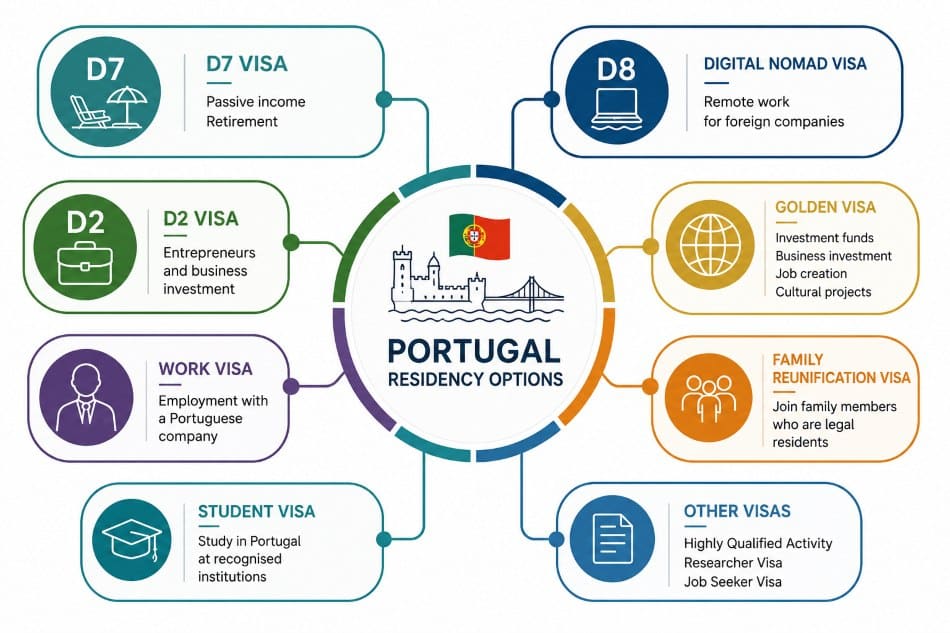
Portugal offers a range of visa options designed to accommodate retirees, remote workers, entrepreneurs, investors, employees and family members.

The D7 Visa: Portugal’s retirement and passive income visa

The D7 Visa remains one of Portugal’s most popular residency routes.

It is designed for individuals who have sufficient passive income to support themselves without needing employment in Portugal. Sources of income may include pensions, rental income, dividends, investment returns or royalties.

The D7 is particularly popular with retirees and financially independent individuals seeking to relocate permanently to Portugal.

The Golden Visa

Portugal’s Golden Visa remains available in 2026, although significant changes have been introduced.

Residential and commercial property purchases no longer qualify for the programme.

Current qualifying routes generally focus on:

  • Investment funds
  • Business investment
  • Job creation
  • Scientific research
  • Cultural heritage projects

The Golden Visa remains attractive because it requires relatively limited physical presence in Portugal while still providing a route towards permanent residency and citizenship. Also, unlike the other visas the applicant need not become a Portuguese tax resdient, as long as they do not spend more than 183 days per year in the countty.

The Digital Nomad Visa

Introduced in response to the growing remote working trend, Portugal’s Digital Nomad Visa (the D8) allows foreign nationals employed by overseas companies or operating their own businesses remotely to live in Portugal.

Applicants must meet minimum income requirements and demonstrate that their work is carried out for clients or employers outside Portugal.

The visa has become especially popular among technology professionals, consultants and online entrepreneurs.

The D2 Visa: Portugal’s entrepreneur and investment visa

The D2 Visa is one of the most flexible routes to Portuguese residency.

Designed for entrepreneurs, business owners and independent professionals, it allows applicants to establish or invest in a business in Portugal.

Unlike the Golden Visa, there is no fixed minimum investment amount. Instead, applicants must demonstrate that their proposed business activity is viable and has the potential to contribute to the Portuguese economy.

The D2 is commonly used by:

  • Entrepreneurs launching a Portuguese company
  • Existing business owners expanding into Portugal
  • Consultants and freelancers
  • Small business investors

For many applicants, the D2 Visa offers one of the most accessible pathways to residency through business activity.

Work visas

Individuals who have secured employment with a Portuguese company may apply for a work visa (the D1).

The employer typically plays a key role in supporting the application process.

Portugal continues to attract skilled workers in sectors such as technology, healthcare, engineering, tourism and hospitality.

Highly Qualified Activity (HQA) and specialist routes

Portugal offers additional residency pathways for highly qualified professionals, researchers, academics and individuals involved in innovation-related activities.

These programmes are designed to attract talent and support economic growth.

Eligibility depends on professional qualifications, experience and the nature of the proposed activity.

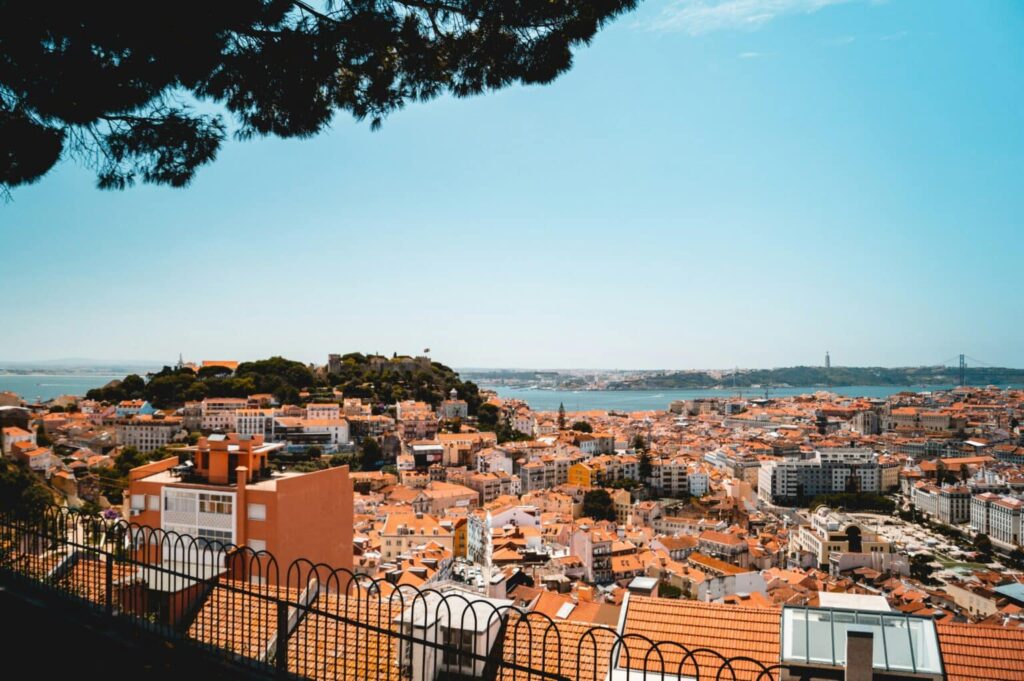
Lisbon – Photo: Louis Droege/Unsplash

Student visas

Foreign nationals enrolled in recognised Portuguese educational institutions may apply for student residency permits.

These visas are popular with university students, postgraduate researchers and individuals undertaking specialised training programmes.

Family reunification

Portugal allows qualifying family members of legal residents to apply for residency through family reunification.

Spouses, dependent children and, in some circumstances, dependent parents may be eligible.

This route is widely used by expatriates who initially relocate alone and later bring family members to Portugal.

How long does residency last?

Most initial residence permits are granted for two years and can subsequently be renewed.

After five years of legal residency, many foreign residents become eligible to apply for permanent residency.

Can residents access healthcare?

Yes.

Legal residents generally have access to Portugal’s public healthcare system, known as the SNS.

Many expatriates also choose private health insurance to gain faster access to specialists and private hospitals.

What about taxes?

Tax residency and immigration residency are not necessarily the same thing.

Anyone planning to relocate should obtain professional tax advice before moving, particularly if they have overseas assets, pensions, businesses or investments.

Portugal remains attractive from a taxation perspective for many individuals, but the rules vary depending on personal circumstances.

Is Portuguese citizenship possible?

For many foreigners, obtaining Portuguese citizenship is the long-term objective.

After ten years of legal residency, applicants may be eligible to apply for citizenship, subject to meeting language and other legal requirements.

Portuguese citizenship provides the right to live, work and travel freely throughout the European Union.

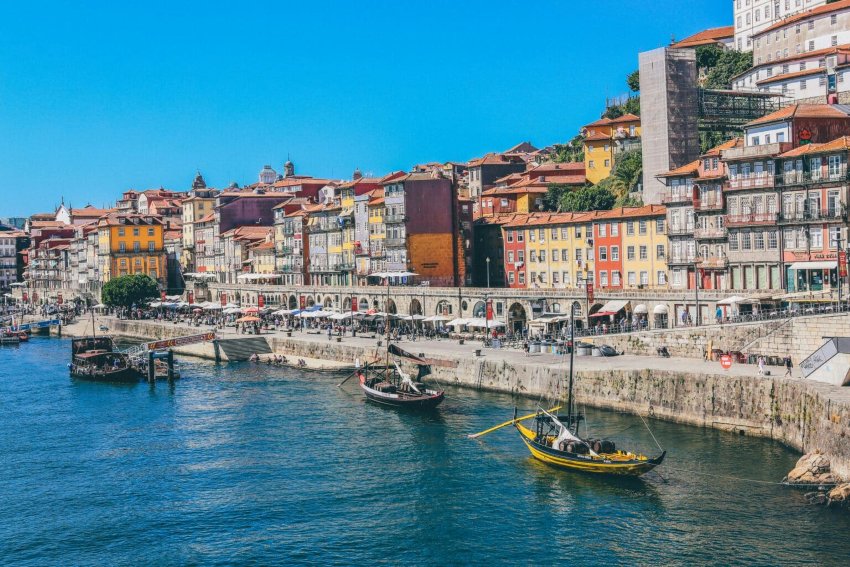
Porto – Photo: Nick Karvounis/Unsplash

Which visa is best?

The answer depends entirely on your circumstances.

  • Retirees often favour the D7 Visa.
  • Remote workers frequently choose the Digital Nomad Visa.
  • Entrepreneurs and business owners commonly use the D2 Visa.
  • Investors may consider the Golden Visa.
  • Employees generally require a work visa.
  • Students can apply for student residency permits.

Portugal’s wide range of residency options means there is a suitable pathway for almost every type of applicant.

For anyone considering a move to Portugal in 2026, understanding these residency routes is the first step towards building a successful life in one of Europe’s most popular destinations.

Article originally published on The Resident.

Healthcare in Portugal explained for foreign residents

Thinking of moving to Portugal? Here’s how the country’s public and private healthcare systems work, what treatment costs to expect and how foreign residents can access care

Healthcare is one of the most important factors to consider when relocating to another country. Whether you are moving to Portugal for work, retirement, business, investment, study or simply a change of lifestyle, understanding how the healthcare system works can provide valuable peace of mind.

Fortunately, Portugal is widely regarded as having one of Europe’s strongest healthcare systems. The country combines a comprehensive public healthcare network with a growing private sector, giving residents access to a broad range of medical services at relatively affordable costs.

Does Portugal have public healthcare?

Yes.

Portugal operates a national healthcare system known as the Serviço Nacional de Saúde (SNS), which provides healthcare services to legal residents throughout the country.

Once registered, residents can generally access a wide range of healthcare services, including:

  • General practitioner (GP) appointments
  • Specialist consultations
  • Hospital treatment
  • Emergency care
  • Maternity services
  • Preventative healthcare programmes
  • Mental health services

The SNS is funded primarily through taxation, making healthcare significantly more affordable than in countries such as the USA. While some services may involve small user fees, the cost of treatment is generally heavily subsidised.

Is private healthcare available?

Yes.

Alongside the public system, Portugal has an extensive network of private hospitals, clinics and specialist medical centres.

Many foreign residents choose to combine access to the public healthcare system with private health insurance, allowing them to benefit from both sectors.

Private healthcare is particularly popular because it usually offers:

  • Shorter waiting times
  • Greater flexibility when choosing doctors and specialists
  • Modern facilities and equipment
  • Convenient appointment scheduling
  • Better access to English-speaking medical professionals

Major cities such as Lisbon, Porto and Faro, as well as popular international destinations throughout the Algarve, are home to numerous high-quality private healthcare providers.

How much does healthcare cost?

Healthcare costs in Portugal are generally considered reasonable by European standards.

The public healthcare system provides access to essential medical services mostly free of charge or at relatively low cost, while private health insurance remains considerably more affordable than in many other developed countries.

As a guide, comprehensive private health insurance for an adult may range from approximately €800 to €2,500 per year depending on age, medical history, coverage levels and provider.

Consultations with private doctors typically cost between €60 and €120, while specialist appointments may cost slightly more.

Prescription medicines are also often subsidised by the state, helping to reduce out-of-pocket expenses.

Are English-speaking doctors available?

Yes.

English-speaking doctors and healthcare professionals are widely available, particularly in areas with significant international communities.

Many private hospitals and clinics actively cater to foreign residents and international patients, while an increasing number of healthcare professionals within the public system also speak English.

In addition to English, it is often possible to find medical professionals who speak French, German, Dutch and other European languages.

What about emergency care?

Portugal provides a comprehensive emergency medical service.

Residents can access emergency departments at public and private hospitals, while the national emergency number 112 connects callers to ambulance, police and fire services.

Emergency care standards are generally high, particularly in urban areas and major population centres. It is important to note that when dialing 112 in a medical emergency, the ambulance will always take the patient to a state hospital where treatment will be administered. If a patient wishes to then move to a private hospital this is possible but the patient must assume the cost of a private ambulance if required.

Is healthcare one of Portugal’s advantages?

For many people, the answer is yes.

Healthcare is frequently cited as one of the reasons foreign nationals choose Portugal as their new home. Combined with the country’s safety, climate, high quality of life, modern infrastructure and welcoming international communities, access to reliable healthcare adds to Portugal’s appeal as a destination for relocation.

Whether moving alone, as a couple or with a family, understanding the healthcare options available before arriving can help ensure a smoother transition and greater confidence when starting a new life in Portugal.

Article originally published on The Resident.

The complete guide to private hospitals in Portugal

Your essential guide to the country’s leading private hospitals and specialist medical care

Whether living permanently in Portugal or visiting for an extended period, patients have access to an extensive network of high-quality private healthcare. While hundreds of smaller clinics provide excellent local services, the country’s major private hospitals deliver comprehensive medical care, advanced technology and specialist expertise comparable with leading private hospitals elsewhere in Europe.

Several major healthcare groups dominate the sector, including CUF, Luz Saúde, Lusíadas Saúde, Hospital da Luz and Trofa Saúde, alongside a number of respected independent hospitals. Together they provide comprehensive healthcare coverage across mainland Portugal, Madeira and the Azores.

For many foreign residents, private health insurance remains an affordable way to access faster appointments, shorter waiting times and a broader choice of specialists.

This guide highlights the country’s principal private hospitals region by region.

North

Hospital da Luz Guimarães – Guimarães
A leading private healthcare provider in the Minho region, Hospital da Luz Guimarães offers urgent care, surgery, diagnostic imaging, physiotherapy, specialist consultations and day-case procedures. It provides comprehensive medical services for both local residents and patients from across northern Portugal.

CUF Porto Hospital – Porto
One of northern Portugal’s leading private hospitals, offering emergency care, surgery, diagnostics, oncology, cardiology, orthopaedics and maternity services, supported by modern technology and highly specialised medical teams.

Hospital da Luz Arrábida – Vila Nova de Gaia
Serving the Porto metropolitan area, offering emergency care, surgery, diagnostics, oncology, paediatrics, maternity services and specialist outpatient consultations.

Lusíadas Porto Hospital – Porto
Part of the Lusíadas Saúde network, offering emergency care, surgery, diagnostics, specialist consultations and patient-focused services in a modern setting.

Trofa Saúde Hospital Vila Real – Vila Real
Serving the Trás-os-Montes region, offering emergency care, surgery, diagnostics, maternity services and specialist medical consultations.

Trofa Saúde Braga Sul – Braga
A major private healthcare provider for the Braga region, offering emergency care, surgery, diagnostics, rehabilitation services and specialist outpatient consultations.

Hospital Privado de Braga – Braga
This independent private hospital offers emergency care, surgery, diagnostics, cardiology, orthopaedics and specialist consultations.

Trofa Saúde Alfena Hospital – Valongo
Serving communities east of Porto, offering emergency care, surgery, diagnostics, outpatient services and specialist consultations.

Central Portugal

Hospital CUF Coimbra – Coimbra
One of central Portugal’s newest major private hospitals, offering emergency care, surgery, diagnostics, oncology, cardiology and multidisciplinary specialist consultations.

Hospital da Luz Coimbra – Coimbra
Offering emergency care, surgery, diagnostics, imaging services and specialist consultations across a wide range of medical disciplines.

Lusíadas Hospital Santa Maria da Feira – Santa Maria da Feira
Serving the Aveiro district, offering emergency care, surgery, diagnostics, maternity services and specialist consultations.

Hospital CUF Viseu – Viseu
A modern regional hospital offering emergency care, surgery, diagnostics, physiotherapy services and specialist consultations.

Hospital CUF Leiria – Leiria
Serving Leiria and the surrounding central region, Hospital CUF Leiria offers 24-hour urgent care, surgery, diagnostic imaging, physiotherapy, specialist consultations and day procedures. As part of the CUF network, it provides modern facilities and multidisciplinary care across a broad range of medical specialties.

Hospital do Oeste Soerad – Torres Novas
An established independent private hospital offering emergency care, surgery, diagnostics, rehabilitation services and specialist consultations.

Lisbon and surrounding area

Hospital da Luz – Lisbon
One of Portugal’s best-known private hospitals, Hospital da Luz Lisboa offers a wide range of specialist consultations, diagnostics, surgery and urgent care, with strong international patient support.

Hospital CUF Tejo – Lisbon
A flagship CUF hospital in Lisbon, CUF Tejo is a modern private facility offering advanced diagnostics, surgery, specialist medicine, paediatrics and multidisciplinary care.

Hospital CUF Descobertas – Lisbon
Located in Parque das Nações, CUF Descobertas is one of Lisbon’s established private hospitals, known for broad medical services, surgery, imaging and 24-hour permanent care.

Hospital Lusíadas – Lisbon
A leading central Lisbon private hospital, Lusíadas Lisboa offers specialist consultations, diagnostics, surgery and agreements with major insurers and health subsystems.

Hospital Cruz Vermelha – Lisbon
Hospital Cruz Vermelha is a long-established Lisbon hospital offering more than 35 specialties, non-scheduled care and agreements with ADSE and major insurers.

Hospital da Luz – Oeiras
Serving the western Lisbon area, Hospital da Luz Oeiras offers consultations, exams, surgery and urgent care, with modern facilities and access to the wider Luz Saúde network.

Hospital CUF – Cascais
A major private hospital for Cascais and the Lisbon coast, CUF Cascais provides a broad range of specialties, diagnostics, surgery and permanent care services.

Hospital CUF Sintra – Sintra
One of CUF’s newest private hospitals, Hospital CUF Sintra provides 24-hour urgent care, advanced diagnostics, surgery, cardiology, orthopaedics, paediatrics and specialist consultations. Designed with state-of-the-art facilities, it serves the growing communities of Sintra and Greater Lisbon.

Hospital Lusíadas Amadora – Amadora
Serving Amadora and the western Lisbon metropolitan area, Hospital Lusíadas Amadora provides urgent care, surgery, advanced diagnostic imaging, specialist consultations and outpatient services across a wide range of medical specialties. As part of the Lusíadas Saúde network, it offers modern facilities and coordinated patient care.

Hospital da Luz Setúbal – Setúbal
Serving Setúbal and the surrounding peninsula, Hospital da Luz Setúbal offers urgent care, surgery, diagnostic imaging, oncology, cardiology, orthopaedics and specialist outpatient consultations. As part of the Luz Saúde network, it combines modern technology with multidisciplinary medical care.

Alentejo

Hospital da Misericórdia de Évora – Luz Saúde – Évora
Hospital da Misericórdia de Évora – Luz Saúde is a modern private hospital offering multidisciplinary healthcare, advanced diagnostics, surgery, emergency care and specialist services to patients across Alentejo.

Hospital CUF Alentejo – Sines
Part of Portugal’s largest private healthcare group, CUF Alentejo provides modern diagnostic services, day surgery, specialist consultations, imaging, physiotherapy and multidisciplinary medical care.

Hospital São João de Deus – Montemor-o-Novo
An established independent hospital providing surgery, rehabilitation, diagnostic imaging, outpatient consultations and specialist medical services for central Alentejo communities.

Algarve

Hospital CUF Descobertas – Faro
One of southern Portugal’s leading private hospitals, offering a 24-hour emergency department, advanced surgery, oncology, cardiology, maternity services, intensive care, diagnostics and numerous specialist medical services.

Lusíadas Faro Hospital – Faro
A modern private hospital offering emergency care, surgery, advanced imaging, oncology, cardiology, maternity services and a wide range of specialist consultations, serving both local residents and international patients.

Hospital de Loulé – Loulé
An independent private hospital providing surgery, outpatient consultations, diagnostic imaging, physiotherapy, day procedures and specialist medical services to central Algarve communities.

Hospital Lusíadas – Albufeira
Serving the central Algarve, Hospital Lusíadas Albufeira provides specialist consultations, diagnostic imaging, outpatient surgery and urgent care. As part of the Lusíadas Saúde network, it offers modern facilities and coordinated access to a broad range of medical specialties for both residents and international visitors.

Hospital CUF Alvor – Portimão
Serving the western Algarve, this modern hospital provides emergency medicine, surgery, imaging, orthopaedics, cardiology, physiotherapy and specialist consultations for residents and visitors.

Hospital São Camilo – Portimão
Located in Portimão, Hospital São Camilo is a long-established private hospital providing inpatient care, surgery, specialist consultations and diagnostic services. It serves residents across the western Algarve and complements the region’s larger private hospital networks with a more local, community-focused approach.

Madeira

Hospital CUF Madeira – Funchal
Madeira’s largest private hospital provides 24-hour emergency care, advanced surgery, diagnostic imaging, cardiology, oncology, orthopaedics, maternity services and a wide range of specialist outpatient consultations for residents and visitors.

Clínica de Santa Luzia – Funchal
One of Madeira’s longest-established private medical centres, offering specialist consultations, diagnostic imaging, physiotherapy, outpatient surgery and day-case procedures across numerous medical disciplines.

Hospital da Luz Madeira – Funchal
Part of the Hospital da Luz network, this modern private hospital offers emergency medicine, surgery, advanced diagnostics, cardiology, orthopaedics and specialist medical consultations in contemporary facilities.

Azores

Hospital CUF Açores – Lagoa, São Miguel
The Azores’ leading private hospital provides 24-hour urgent care, surgery, inpatient care, intensive care, advanced diagnostic imaging and more than 20 medical and surgical specialties. Serving patients from across the archipelago, it forms part of the nationwide CUF healthcare network.

Clínica do Bom Jesus – Ponta Delgada, São Miguel
A respected private medical clinic providing specialist consultations, diagnostic services, physiotherapy, imaging and minor surgical procedures for residents and visitors alike.

Casa de Saúde de Nossa Senhora da Conceição – Angra do Heroísmo, Terceira
Serving Terceira Island, this long-established private healthcare facility provides specialist consultations, diagnostics, rehabilitation services, day surgery and a range of outpatient medical treatments.

Article originally published on The Resident.

Moving to Portugal in 2026? Here’s what life really costs

The days of ultra-cheap living may be over, but Portugal remains an attractive option for many international residents

For years, Portugal was sold abroad as one of Europe’s last great bargains – a place where sunshine, good food and a relaxed pace of life could be enjoyed for a fraction of the cost of living in London, San Francisco or Scandinavia.

And to some extent, that remains true.

A coffee can still cost less than €1 in some cafés. A leisurely lunch in a local restaurant needn’t break the bank and fresh fish, fruit and vegetables continue to represent good value. But in 2026, the reality is rather more nuanced.

Portugal can still offer excellent value compared with many parts of the UK, the United States and Northern Europe, yet rising housing costsinflation and changing lifestyles mean newcomers need a more realistic understanding of what everyday life actually costs.

The answer depends largely on where you choose to live.

Real estate

Housing remains by far the biggest factor influencing the cost of living. Lisbon continues to be Portugal’s most expensive city, followed by sought-after areas such as Cascais, parts of the Silver Coast and many locations in the Algarve. Porto remains somewhat more affordable than the capital, although prices there have risen considerably over the past few years.

The Algarve perhaps best illustrates Portugal’s growing regional divide. Prime areas such as Quinta do LagoVale do LoboVilamouraLagos and Carvoeiro now command prices that would have seemed unimaginable a decade ago. Yet move inland to places such as São Brás de Alportel, Monchique or parts of the eastern Algarve and costs can fall dramatically.

Elsewhere, the Silver Coast continues to attract buyers seeking a balance between lifestyle and affordability. Areas around ÓbidosCaldas da Rainha and Nazaré remain popular, although increasing international demand means prices are often higher than many newcomers expect.

Madeira has experienced a similar trend. The island’s popularity with digital nomads, foreign residents and international investors has pushed property values upwards, particularly in and around Funchal. The Azores generally remain among Portugal’s more affordable regions, although the additional cost of transporting goods to the islands means some everyday purchases can be more expensive than on the mainland.

Food prices

Food prices have also changed. Portugal’s supermarkets still compare favourably with many countries in Western Europe, particularly when buying local fruit and vegetables, fresh fish and seasonal produce. Imported foods, international brands and convenience items, however, have all seen noticeable increases.

Eating out remains one of Portugal’s enduring strengths. A traditional prato do dia (dish of the day) in a neighbourhood restaurant can still represent excellent value, while cafés continue to offer inexpensive coffee and pastries. In tourist hotspots, however, prices increasingly reflect international demand rather than local purchasing power.

Utilities

Utilities are another expense many relocation guides gloss over. Electricitywaterinternet and mobile services remain reasonable by European standards, but air conditioning during increasingly hot summers and heating in winter can substantially increase bills, especially in older properties with poor insulation.

Transportation

Transport costs are also worth considering. While public transport networks in Lisbon and Porto are relatively affordable, many residents in smaller towns, rural areas, Madeira and the Azores depend heavily on private vehicles. Fuelinsurancetollsmaintenance and annual inspections can quickly add up.

Healthcare

Healthcare remains one of Portugal’s major attractions. Residents have access to the public healthcare system (SNS), while many also choose private health insurance to secure faster appointments and greater flexibility.

Although private healthcare is generally affordable by international standards, it should still form part of any realistic monthly budget.

Read our dedicated guide to healthcare in Portugal.

Context matters

Seen in this context, Portugal still represents good value for many international residents. However, the days when newcomers could expect a near-Mediterranean lifestyle on a modest budget in every part of the country are largely behind us. Increasingly, affordability depends not only on income, but also on being flexible about where in Portugal you choose to live.

There are also a number of less obvious costs that many relocation articles fail to mention. Condominium feesproperty maintenanceIMI council property tax, legal feesresidency applicationsdocument translationsvehicle registration expenses and private schooling can all have a significant impact on annual spending.

So what does comfortable living actually cost?

A single person renting in Lisbon, Porto, Madeira or a popular Algarve location may easily require between €1,800 and €2,500 per month to maintain a comfortable lifestyle. Couples often benefit from economies of scale, while homeowners and those living away from the most sought-after areas may spend considerably less.

Portugal undoubtedly remains one of Europe’s most attractive destinations for those seeking safety, climate, healthcare and quality of life. But successful relocation increasingly depends on matching expectations with reality.

For anyone considering moving to Portugal in 2026, the most important question is no longer whether the country is cheap. It is whether the lifestyle, location and budget are the right fit for you.

Article originally published on The Resident.

Buying property in Portugal: everything you need to know in 2026

From finding the right location to signing the final deed, here’s what international buyers need to know

Portugal has become one of Europe’s most sought-after property markets, attracting buyers from across the world thanks to its climate, safety, lifestyle, infrastructure and relatively affordable property compared with many other Western European countries.

Whether you are looking for a holiday home, permanent residence, retirement property or investment opportunity, understanding how the Portuguese property market works is essential.

Can foreigners buy property in Portugal?

Yes.

Portugal places very few restrictions on foreign ownership of property. Buyers from the European Union, United Kingdom, United States, Canada and many other countries can purchase apartments, villas, townhouses, land and commercial property.

Foreign buyers enjoy the same ownership rights as Portuguese citizens.

Where are the most popular areas to buy?

The Algarve remains Portugal’s best-known international property market, particularly for lifestyle and retirement buyers.

Lisbon and Cascais continue to attract professionals, entrepreneurs and investors, while Porto has grown in popularity due to its vibrant culture and strong rental market.

Other emerging destinations include Comporta, the Silver Coast, Madeira and the Azores.

How much does property cost in Portugal?

Prices vary significantly by region.

Prime areas of Lisbon, Cascais, Quinta do Lago and Vale do Lobo command some of the highest prices in the country, while inland regions and smaller towns often offer considerably better value.

Buyers should carefully compare asking prices with recent market trends and local demand before making a purchase.

What additional costs should buyers expect?

When purchasing property in Portugal, buyers should budget for additional costs beyond the purchase price, including:

  • Property Transfer Tax (IMT)
  • Stamp Duty
  • Legal fees
  • Notary fees
  • Land Registry fees
  • These costs typically add several percentage points to the overall transaction value; a reasonable average is around 8%.

Should I use a lawyer?

Yes.

An independent lawyer can verify ownership, ensure there are no debts or legal issues attached to the property and oversee the transfer process.

This is one of the most important steps when buying property in Portugal.

Can foreigners obtain a mortgage?

Yes.

Many Portuguese banks offer mortgages to foreign buyers, although lending criteria, loan-to-value ratios and interest rates vary depending on the applicant’s circumstances.

Mortgage availability may differ for residents and non-residents.

Can property owners earn rental income?

Yes.

Portugal has an established holiday rental and long-term rental market.

However, regulations governing short-term holiday rentals have changed in recent years and buyers should seek professional advice regarding licensing requirements and local restrictions.

Is buying property in Portugal a route to residency?

Not automatically.

Although Portugal’s Golden Visa programme still exists, residential property purchases no longer qualify for the scheme.

Property ownership and residency should therefore be considered as separate matters.

Why is Portugal so popular with international buyers?

Portugal consistently ranks highly for quality of life, safety, healthcare, climate and political stability.

The country offers more than 300 days of sunshine in many regions, excellent transport links, beautiful coastlines and a welcoming international community.

For many buyers, Portugal represents a rare combination of lifestyle, investment potential and long-term security.

How does the buying process work?

The property purchase process in Portugal typically begins with an offer and negotiation. This is sometimes followed by a non-binding reservation agreement and refundable deposit. Once the deal is agreed, buyers then undertake legal due diligence, obtain a Portuguese tax number (NIF), and sign a Promissory Contract (CPCV), usually paying 10% (sometimes higher) of the purchase price. This deposit is not refundable, meaning that if the buyer backs out after signing the CPCV, they forfeit the deposit. On the other hand, if the vendor backs out, they must compensate the buyer by paying back double the amount of the deposit.

The transaction is completed at the final deed signing (Escritura) before a notary or lawyer, when the balance is paid and ownership is officially registered. The process generally takes between one and three months.

Article originally published on The Resident.

Testimonial: Mike and Neidre from Houston

American couple Mike and Neidre traded U.S. healthcare costs and stress for a simpler life on Portugal’s Setúbal coast

When Mike and Neidre Via left Houston, Texas, for Setúbal, Portugal, they carried three suitcases, each with a backpack, and the determination to start over. Their move, guided by Calvin Mazlumyan of Plan B Outbound Migration and his partner law firm in Portugal, was driven by two main factors: financial reality and the search for a healthier, less stressful life.

At 66, Mike was ready to stop working. In the U.S., that didn’t seem possible. Even with Social Security, both would have needed jobs just to cover basic expenses — especially healthcare.

“If we were to stay in the States, we’d both have to work,” Mike says. “And I am done.” The risk of a major illness wiping out their savings weighed heavily on him.

For 52‑year‑old Neidre, there was also a health dimension. She was born with asthma and struggled in Houston’s polluted, car‑dependent environment, needing inhalers and pills daily. But trips to Italy in 2022 and Tenerife in 2023 changed her perspective. Days spent biking in the Dolomites and a week by the sea in the Canary Islands passed without a single asthma attack.

Europe seemed kinder to her lungs — and to their lifestyle. When Mike’s company offered early retirement in 2024, their vague plan to “move to Europe someday” suddenly felt urgent. If they stayed in the U.S., Neidre would have to work another 15–20 years before she could retire. Instead, they began looking at Portugal, a country they knew only from a surfing documentary about Nazaré.

Their first visit in July 2024 took them from Lisbon to Porto, then down to Nazaré, and finally to Faro in the Algarve. They travelled entirely by public transport to test whether they could live without a car. By the time they flew home, the decision was clear: they wanted to leave the U.S. by the end of 2025.

Through an online “move abroad” programme, they learned about the “Living in Portugal” seminar in Houston that April — the only one scheduled there for two years. There, they met Calvin Mazlumyan of Plan B Outbound Migration. Within that hour, they realised they needed professional help to navigate Portugal’s visa and residency system.

Calvin and his Portuguese partner law firm, NSM, handled the logistics: opening a Portuguese bank account, creating detailed document checklists, and booking their VFS visa appointment (the earliest available was October 30). The lawyers’ eye for detail proved crucial. They caught that the couple’s rental contract in Portugal was for one year, not the two years required for residency, and had it corrected. They also flagged the need for an apostille on their marriage certificate, prompting a same‑day dash from Houston to Austin to get it in time.

Timing was everything. Many documents must be issued within 30–90 days of the appointment. Without expert guidance, Mike and Neidre admit they would have missed key deadlines.

The biggest shock came when Mike’s FBI background check flagged a minor, decades‑old issue dating back to 1997. Their visa was initially denied. With only about two weeks to appeal and Thanksgiving looming, NSM drafted a legal appeal, told them exactly what proof to gather, and resubmitted the file. The appeal succeeded. On December 31, their visas were approved; on January 19, they landed in Portugal — just as Storm Ingrid hit.

They had already committed to Setúbal, a city they had never visited but chose strategically. Coming from Greater Houston’s four million people, they didn’t want to jump into a village of a few thousand. Setúbal offered urban energy, hospitals, a strong public transport network, and nearby beaches. Lisbon is just 40–50 minutes away by frequent train.

With the help of a local estate agent referred by Neidre’s realtor sister, they rented a fully furnished three‑bed, two‑bath apartment near Praça do Brasil, opposite the train station. The landlord, who lives in Tróia, had stocked it with dishes and cleaning supplies. After selling or giving away all their belongings in Houston — cars, furniture, even hundreds of souvenir shot glasses — they arrived with only clothes and essentials.

Life in Setúbal has settled into a gentle rhythm. Their building is mostly home to older Portuguese residents; few speak English. There’s a café downstairs and several more within a block. They bought bikes, joined a gym about 2 km away, and organised their days around workouts, grocery trips, beach outings, castle visits, and evenings with wine at local cafés. The regulars now bring them snacks and chat; they, in turn, are learning Portuguese phrase by phrase, with help from Google Translate and their neighbours’ patience.

They’ve made a deliberate choice to avoid expat meetups. “We want to be part of the Portuguese culture,” says Neidre. As a Black American woman with natural hair, she’s often assumed to be Brazilian or Angolan and addressed in Portuguese. Mike is often mistaken for a European. These assumptions, combined with daily immersion, are slowly improving their language skills.

American couple Mike and Neidre

Looking back, both say they wish they had moved earlier — but they’re clear that without Calvin and Plan B Outbound Migration, the move might never have happened. From correcting leases and tracking expiry dates to drafting a time‑critical legal appeal, the support they received transformed a daunting bureaucracy into a solvable puzzle.

Today, the soundtrack of their lives is no longer Houston traffic and hold music from insurance companies. It’s the clatter of coffee cups downstairs, the whistle of the train across the street, and the sea breeze on the promenade. When Calvin visited recently, he told them they looked like different people — lighter, younger, and completely at ease.

They came for lower costs and better healthcare. They stayed for something they hadn’t quite planned on: lazy afternoons at the café, bikes instead of cars, neighbours who bring wine and peanuts to the table — and the delicious realisation that, somehow, this “Plan B” has become the life they were looking for all along.

Article originally published on The Resident.