Longer path to a passport has done little to dent US demand for residency, lifestyle and a European foothold
Changes to Portugal’s citizenship laws may have made the route to a Portuguese passport longer, but there is little evidence that Americans have lost their appetite for the country.
Portugal remains one of the leading European destinations for Americans seeking either a permanent move or what has increasingly become known as a “Plan B” – the option of living in Europe should they choose to leave the United States in the future.
For wealthier Americans, the Golden Visa continues to play an important role. Although recent changes mean that most US citizens now face a longer wait before becoming eligible to apply for Portuguese citizenship, the programme still offers something relatively unusual: the possibility of securing European residency without having to relocate permanently.
Golden Visa holders are required to spend only a limited amount of time in Portugal, while benefiting from residency rights and freedom of movement within the Schengen Area. Permanent residency also remains a potential option after five years, subject to meeting the relevant requirements.
There were predictions that the citizenship changes would trigger an exodus of investors. Some investors have indeed reconsidered their plans and redemptions from Golden Visa-linked investment funds have increased. However, industry data reported this year suggests fresh investment into qualifying funds has continued to comfortably exceed withdrawals.
The wider trend among Americans is equally significant. Demand for European residency options remains strong, with Portugal continuing to rank among the most attractive destinations for US citizens looking for greater flexibility, security and access to Europe.
For those actually planning to move, Portugal’s appeal goes well beyond immigration rules.
Retirees continue to be attracted by the climate, safety, relatively affordable private healthcare and a cost of living that, despite rising substantially in Lisbon and parts of the Algarve, can still compare favourably with many major US cities. The D7 visa remains an established option for those with sufficient passive or retirement income.
Portugal has also become a natural choice for remote workers and entrepreneurs. Its Digital Nomad Visa provides a route for qualifying professionals earning income from outside Portugal, while reliable internet, good international air connections and established expatriate communities add to the attraction.
Citizenship may now take longer, but for many Americans that was never the only reason to choose Portugal. Lifestyle, security, healthcare and the ability to establish a foothold in Europe remain powerful selling points – and Portugal continues to tick more of those boxes than most of its competitors.
From retirement visas to digital nomad permits and investment routes, here’s what foreign nationals need to know about moving to Portugal in 2026
Portugal remains one of Europe’s most attractive destinations for people seeking a better quality of life, a warm climate, excellent healthcare, political stability and access to the European Union. As a result, thousands of foreigners relocate to Portugal every year.
But what are the available routes to Portuguese residency in 2026, and which visa is right for you?
Who needs a visa to move to Portugal?
Citizens of European Union and European Economic Area countries generally have the right to live and work in Portugal with relatively few formalities.
For non-EU citizens, including British, American, Canadian, Australian and South African nationals, a visa is usually required before applying for residency.
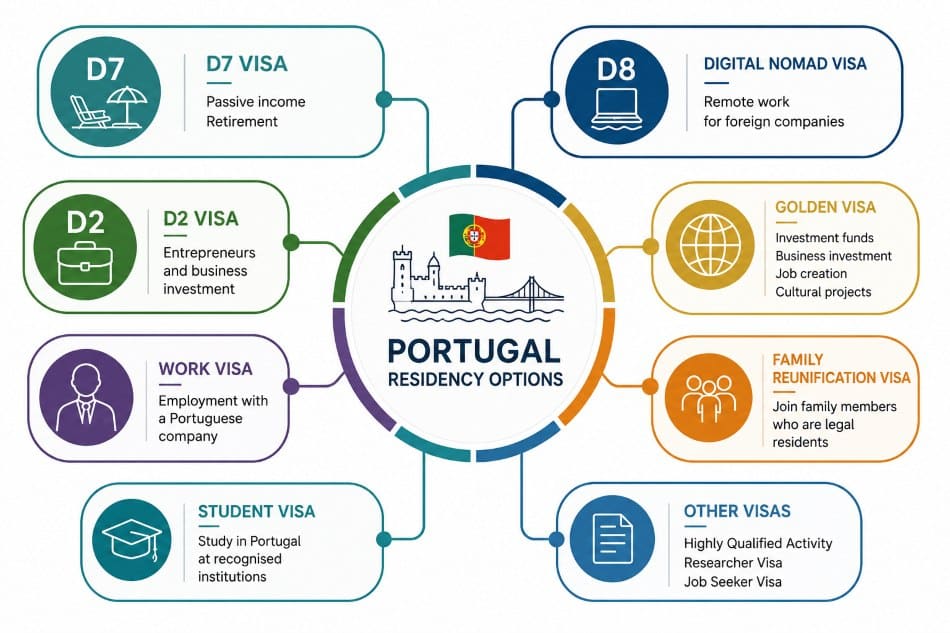
Portugal offers a range of visa options designed to accommodate retirees, remote workers, entrepreneurs, investors, employees and family members.
The D7 Visa: Portugal’s retirement and passive income visa
The D7 Visa remains one of Portugal’s most popular residency routes.
It is designed for individuals who have sufficient passive income to support themselves without needing employment in Portugal. Sources of income may include pensions, rental income, dividends, investment returns or royalties.
The D7 is particularly popular with retirees and financially independent individuals seeking to relocate permanently to Portugal.
The Golden Visa
Portugal’s Golden Visa remains available in 2026, although significant changes have been introduced.
Residential and commercial property purchases no longer qualify for the programme.
Current qualifying routes generally focus on:
Investment funds
Business investment
Job creation
Scientific research
Cultural heritage projects
The Golden Visa remains attractive because it requires relatively limited physical presence in Portugal while still providing a route towards permanent residency and citizenship. Also, unlike the other visas the applicant need not become a Portuguese tax resdient, as long as they do not spend more than 183 days per year in the countty.
The Digital Nomad Visa
Introduced in response to the growing remote working trend, Portugal’s Digital Nomad Visa (the D8) allows foreign nationals employed by overseas companies or operating their own businesses remotely to live in Portugal.
Applicants must meet minimum income requirements and demonstrate that their work is carried out for clients or employers outside Portugal.
The visa has become especially popular among technology professionals, consultants and online entrepreneurs.
The D2 Visa: Portugal’s entrepreneur and investment visa
The D2 Visa is one of the most flexible routes to Portuguese residency.
Designed for entrepreneurs, business owners and independent professionals, it allows applicants to establish or invest in a business in Portugal.
Unlike the Golden Visa, there is no fixed minimum investment amount. Instead, applicants must demonstrate that their proposed business activity is viable and has the potential to contribute to the Portuguese economy.
The D2 is commonly used by:
Entrepreneurs launching a Portuguese company
Existing business owners expanding into Portugal
Consultants and freelancers
Small business investors
For many applicants, the D2 Visa offers one of the most accessible pathways to residency through business activity.
Work visas
Individuals who have secured employment with a Portuguese company may apply for a work visa (the D1).
The employer typically plays a key role in supporting the application process.
Portugal continues to attract skilled workers in sectors such as technology, healthcare, engineering, tourism and hospitality.
Highly Qualified Activity (HQA) and specialist routes
Portugal offers additional residency pathways for highly qualified professionals, researchers, academics and individuals involved in innovation-related activities.
These programmes are designed to attract talent and support economic growth.
Eligibility depends on professional qualifications, experience and the nature of the proposed activity.
Lisbon – Photo: Louis Droege/Unsplash
Student visas
Foreign nationals enrolled in recognised Portuguese educational institutions may apply for student residency permits.
These visas are popular with university students, postgraduate researchers and individuals undertaking specialised training programmes.
Family reunification
Portugal allows qualifying family members of legal residents to apply for residency through family reunification.
Spouses, dependent children and, in some circumstances, dependent parents may be eligible.
This route is widely used by expatriates who initially relocate alone and later bring family members to Portugal.
How long does residency last?
Most initial residence permits are granted for two years and can subsequently be renewed.
After five years of legal residency, many foreign residents become eligible to apply for permanent residency.
Can residents access healthcare?
Yes.
Legal residents generally have access to Portugal’s public healthcare system, known as the SNS.
Many expatriates also choose private health insurance to gain faster access to specialists and private hospitals.
What about taxes?
Tax residency and immigration residency are not necessarily the same thing.
Anyone planning to relocate should obtain professional tax advice before moving, particularly if they have overseas assets, pensions, businesses or investments.
Portugal remains attractive from a taxation perspective for many individuals, but the rules vary depending on personal circumstances.
Is Portuguese citizenship possible?
For many foreigners, obtaining Portuguese citizenship is the long-term objective.
After ten years of legal residency, applicants may be eligible to apply for citizenship, subject to meeting language and other legal requirements.
Portuguese citizenship provides the right to live, work and travel freely throughout the European Union.
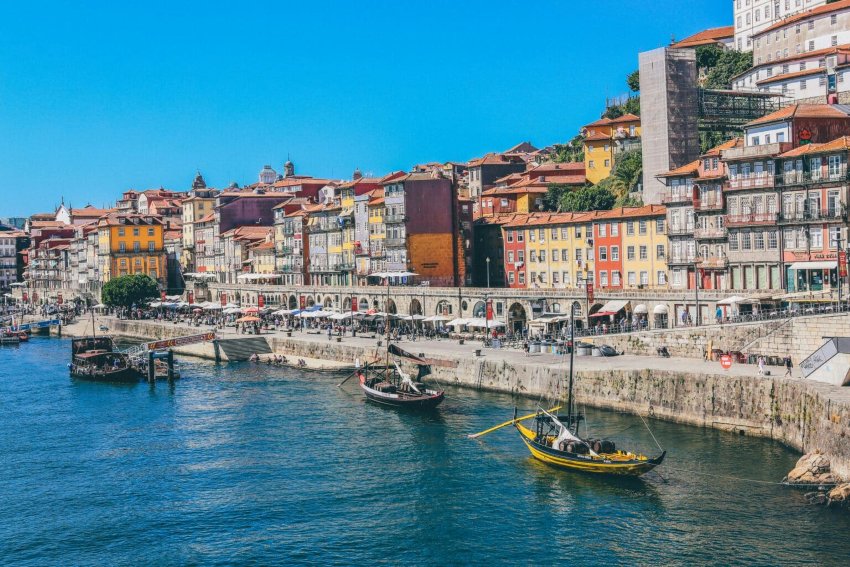
Porto – Photo: Nick Karvounis/Unsplash
Which visa is best?
The answer depends entirely on your circumstances.
Retirees often favour the D7 Visa.
Remote workers frequently choose the Digital Nomad Visa.
Entrepreneurs and business owners commonly use the D2 Visa.
Investors may consider the Golden Visa.
Employees generally require a work visa.
Students can apply for student residency permits.
Portugal’s wide range of residency options means there is a suitable pathway for almost every type of applicant.
For anyone considering a move to Portugal in 2026, understanding these residency routes is the first step towards building a successful life in one of Europe’s most popular destinations.